
FANS
Understand the game. Enjoy it more.
Water polo moves fast, and a lot happens away from the ball. This page helps slow the game down so you can follow what’s happening and why.
How the Game FLows
Water polo isn’t just about whistles. It’s about how play starts, restarts, and moves continuously around the pool. These moments help explain what you’re seeing as the game unfolds.
The Sprint
Each period begins with a sprint to determine possession. The first few seconds after the sprint often set the direction of play.
Putting the Ball in Play
Play officially starts or restarts after a whistle. See how the ball is made live.
Restarting After a Goal
Teams reset after a goal and play is restarted by the team putting the ball in play.
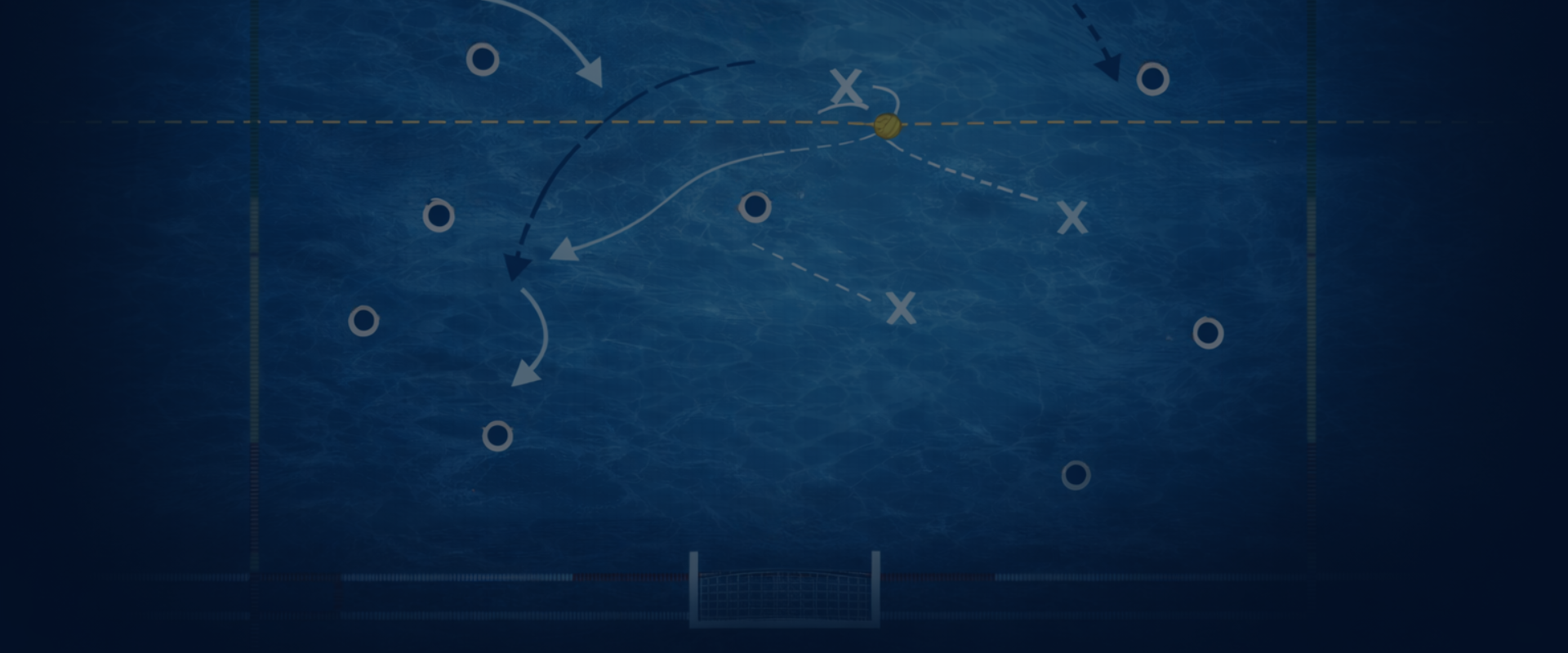
Passing the ball around the Perimeter
The ball moves around the outside of the offense as teams look for openings and shift the defense.
entry Pass to Center
When the ball is passed into the center position much of the action in the water creates a scoring opportunity, a foul, or a steal by the defense.
CORNER THROWS
A corner throw is awarded after the ball goes out of play over the end line having last been touched by the goalie.
NEUTRAL THROWS
Play restarts with a neutral throw when neither team has clear possession after a stoppage.
GOAL THROWS
A goal throw is awarded after the ball goes out of play over the end line having last been touched by an offensive player.
Transition (Offense ↔ Defense)
In water polo, teams quickly switch between offense and defense after turnovers, saves, or missed shots.
Advantage vs. Stoppage
Play sometimes continues without a whistle even when contact occurs, as officials decide whether stopping the game would take away an advantage to the offense.


Most whistles you hear during a game fall into a few familiar categories. Understanding what officials are generally looking for helps the game feel more consistent and easier to follow.
You don’t need to know every rule. Just the big picture.
Two plays can look identical and be ruled differently. That’s not inconsistency. It’s context.
Where players are positioned, who has advantage, and what is about to happen next all matter. Officials are making decisions in real time based on the entire play, not just the moment of contact.
Officials aren’t just watching the ball. They’re tracking off-ball movement, matchups, and developing plays across the pool.
Sometimes the best decision is to let play continue. A whistle can stop advantage just as easily as it can protect fairness.
Related links

Real-game clips organized for learning and review.

Game situations, calls, and rule application.

Support the project and represent the game.